What you will find
in this section
Our ground-breaking bio-social
approach, rooted in Maturana and Varela's powerful theory of the
biology of cognition - gives rise to a unique synthesis of the
biological, social, cultural and personal levels of human reality. This
is the foundation for our integrated account of emotional intelligence
and lived reality, with new insights into the generation of language,
and the evolution of language and culture. The key concept here is
"structural coupling" which is the ground for all bio-social
interaction, and the continuous evolution of consensual domain.
|
|
Who am I?
|
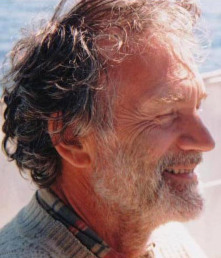 |
I am Michael Roth, the author of all
the material on this site. While training as a medical doctor, I was
also an alumnus at the famed AntiUniversity of London (1968-1969), and
became involved with the alternative psychiatry movement in that era
and later.
I worked and studied with the existential psycho-analyst
R.D.Laing, and was a founder-member of the Arbours Association
(London), which provides alternative care for persons diagnosed with
severe mental illness.
My research path has taken me into spheres of
philosophy, social politics, linguistics and anthropology - whilst I
have continued to seek out a genuine way of relating to other human
beings in the troubled milieux of psychiatry, communal living, and
twentieth and twenty-first century social and cultural instability.
I have been consistently inter-disciplinary in all of my
reading and exploration, and the personal and philosophical insights to
which this has given rise are almost always outside the prevailing
classifications - or accepted lists of subjects.
The following authors are they whose work I have been
most deeply occupied with, at different times in my life. This has
often entailed exploring what the actual world feels like, within the
patterns and definitions of life offered by these people. I have also
written extensively, and often critically, about many of them.
Philosophy
- Jean-Paul Sartre
- Martin Buber
- Lao Ze
- St Matthew
- St Mark
- St Luke
- St John
- Rudolf Bultmann
- Paul Ricoeur
- Richard Rorty
- Robert Pirsig
- Donald Davidson
- Jacques Derrida
- Benedetto Croce
- Charles Peirce
- John Dewey
- A.N.Whitehead
- J.H.Randall
- Justus Buchler
- Martha Nussbaum
Biology, Physiology, Ethology and
Cybernetics
Anthropology
- Mary Douglas
- Gregory Bateson
- Milton Ericson
- R.D.Laing
- David Cooper
- Clifford Geertz
- Victor Turner
Virtual Reality
Psychology
- Eugene Gendlin
- Arnold Mindell
- M. Scott Peck
I am the foremost exponent of Charlotte M. Bach's
ground-breaking theories of emergent evolution, described in my A Bolt From the Bleeding Sky
(Dielectric Publications, London, 1984). I continue to work as a
psychiatrist and as a researcher into holistic methods of facilitating
social change. This used to include facilitation and training sponsored by the
organization, Community Building in Britain which developed and disseminated the
work of the holistic psychiatrist M. Scott Peck through the 90s and noughties.
I am also involved in an exploratory research group
seeking to fuse poetic, practical and fantastical modes of action to
create significant cultural/political interventions in the here and now.
|
|
Consequences of Auto-poiesis.
Life - A Complexity All Its
Own.
The previous chapter opens up an important new
perspective about what it is to
be alive, and what it is to be aware. In one stroke it
re-configures our sense of
what kind of a creature we are, and it opens pathways towards a more
intelligent relationship with our fellow creatures. The theory of
auto-poiesis
offers us glimpses of the spontaneous way in which a living creature becomes
progressively informed about the patterns of event within its
surrounding milieu. And this is a deeper, subtler, more intricate
apprehension of things, than the
usual kind of awareness that we recognize at a conscious level.
It is already happening at the most primitive level of life
that we can imagine. If
we think of planet Earth before and after the emergence of the first
auto-poietic
entities, we see that a new logic of relationship has entered
into the behaviour
patterns of atoms and molecules. This is part and parcel of the new
form of
complexity - which is, in Maturana's phrase, "the organisation of the
living". If
we think of this from the point of view of a carbon atom - recently
captured
from the atmosphere by the photo-synthetic activity of a leaf on an
apple tree: it
has suddenly entered into a new kind of adventure from its previous
life in
limestone, river, sea and sky. Now it has the opportunity to join in
the protein-nucleic acid economy, and in the intricately organised
society of the living cell; it may also be destined into the cellular
economy of you or me, if we should
happen to reach out to eat the apple in which this atom has taken up
residence.
Our reasons for taking up the story of auto-poiesis were not,
however, so that
we can participate in the imaginary life of a carbon atom. We are
trying to gain
a better understanding of our own adventures - and this has
required us to
explore some systems which may be operating, hidden, below the level of
our
conscious life experience.
In trying to imagine auto-poiesis as a component in our own
life, however, we
will run up against a disturbing paradox which resonates directly out
of the
auto-poietic logic. Our problem is that Maturana and his co-workers are
insisting that the theory of auto-poiesis specifically excludes instructional
interaction. This means there can be no traffic of information
across the
organism's boundary - and this is in spite of the busy commuter
transport
system of ions and molecules across that self-same boundary.
Informationally,
the organism is defined as a "closed system", and yet at the material
level it is
clearly an open system. The theory stands in dramatic contradiction
with our
common-sense belief that we humans convey information to one another by
means of language, and that we receive information through our five or
more
senses.
Some paradoxes are just sent to tease and distract us; there
are others which
open up important new territory for us, if only we can approach them in
the
right spirit. I suspect that that every significant theory
generates some
challenging paradox, once we try to marry it up directly with our
common-sense understanding(1). (If there
were no element of contradiction, the theory
would not be any advance upon what we know already.) The question is
whether the jarring element - in this case the prohibition on
information entering
the living system from outside - carries some useful insight, or
fruitful challenge. In the case of auto-poiesis, we will find that the
theory pushes us towards a
diffent conception of how an organism manages to be so
well-informed, given
the prohibition just mentioned.
The simple solution to the paradox is that information is
being generated from
within our organism's own patterned activity. The theory asks us to
picture the
physiological activity as an internally consistent pattern of events,
which suffers
a continuous barrage of impacts and disturbances from "outside"(2). This
provokes the organism into a series of corrections - given its
commitment to
maintain its internal balances within acceptable limits. The pattern of
these
corrections is a kind of imprint, or echo, of things that are going on
in the
environment - but it is a pattern which the organism is generating for
itself. This is the structural coupling between organism and
environment, which we
were looking at in the previous chapter.
The Importance of Structural Coupling.
We also saw the enrichment of this process
which takes place when two
organisms (3) come into proximity. In
this situation there is a triangular set of
couplings: each organism is in a chemical-electric-kinetic dance with
its
neighbour, and each also has its own separate coupling with the
environment. This gives rise to a pattern of interaction which can
properly be called
"linguistic (4)" - but also named consensual
domain by Maturana and co-workers. It
is much the richer when organisms have co-evolved in proximity over
their
billions of years of evolution, and there can be a further gain in
intricacy with
organisms belonging to the same species. Every new meeting is the
opportunity for a re-configuration of the internally-generated
information. Each
organism is being updated with details of the common environment which,
separately, they would not have access to. This is not necessarily a
cosy
situation. We have intimate relationships between predator and prey,
between exploiter
and exploited, between the horse and its rider, and the classy French
madame
with her poodle, not to mention the human and animal kingdom's periodic
bouts of relentless competition for resources; all of these generate
strongly
variant flavours to the consensual domain.
The analogy with language is crucial, and will appear
repeatedly as we follow
this argument through to the higher levels of our personal organisation
and
awareness. This is not "language" in the sense of one person
communicating
their thoughts and feelings through spoken or written words to a
willing
receiver, a listener or a reader. It is, however, a primitive reading
of the situation
by the receiver-organism - within a domain where both organisms are
structurally coupled to aspects of the environment and to each other.
In this
relationship, each organism is acting as a living resonator with those
aspects of
the world it is coupled with, and therefore every discernible shift in
the
demeanour of the transmitter-organism is potentially a readable signal
for the
receiver-organism. Already, at this primitive level of interaction we
have the
relationship of a sign to something signified. (in
the previous chapter I gave an
illustration from personal experience, in the shuffling of people at a
bus stop
which signifies - and often at a completely unconscious level
- that a bus is
approaching from behind me.) The reason this phenomenon is
important to us,
is that it could well be the biological basis for all the higher and
more complex
communication systems which we participate in - at an organic, a social
and a
personal level(5).
The analogy extends further because - even at this rudimentary
level - we can
also see a primitive grammar and logic in operation. The grammar arises
from
the fact that it is only a proportion of the transmitter-organism's
behavioural
patterns which "count"(6) as signals for
the recipient-organism. Also, what these
signals "mean"(6) is entirely dependent
upon the interests and the organisation of
the recipient-organism. This is a process of selective
recognition - of what I
want to call the "words" of this proto-language. And there is a
subsequent
combination of - and an organised response to - the continuing sequence
of
signals/words from the transmitter-organism. This is an exact parallel
with the
operations you are performing, in the act of reading the sentences on
this page;
the "words" have to be combined in an appropriate manner, and there are
appropriate conclusions which need to be drawn. The organism, however,
does all this at a primitive level - where there is no self-awareness,
no
distinction between self and other, and no other(7)
intelligence dwelling within the
process which could conceivably take a perspective upon the process
itself. There is, however, a reading of - and an effective response to
- each moment of
this ongoing life in common.
I am pointing out a similarity between what happens at the
primitive, and what
happens at the higher levels, of creaturely organisation. We also need
to
recognize important contrasts - especially in the extreme poverty of shades
of
meaning, within the world of a simple organism. I have spoken of a
sense of
physiological discomfort, and its contrast with personal comfort. It
may well be
that the organism differentiates amongst several kinds of discomfort -
but certainly there is nothing resembling our rich differentiation: of
the variety of
feelings and moods we register, the variety of facts we entertain and
discriminate, and the variety of actions we undertake - all under the
influence of
communications from our fellow creatures. We shall explore this further
at a
later stage in our study, and see how the different kinds of logic
operating in the
various fields of art, in science and philosophy, in technical design
and
manufacture, in plant and animal husbandry, and in warfare and
religion, can all
be seen as differentiations of a more primitive, or lower-level logic.
At the
physiological level, there is a basic discrimination between "what
fits" and "what
does not fit"; or between "what feels better" and "what feels worse".
This is a
kind of proto-logic in which feeling, judgment and active response are
combined in one, undifferentiated decision.
Returning to the schematic situation of two creatures in their
common
environment, we can summarise our findings as follows: we have a dance
of
consensual domain, in which the recipient organism's behaviour takes
into
account something which is brought to it by the pattern of
behaviour of the
transmitter-organism. Each organism is in turn the transmitter and the
recipient,
and each of them "knows" more in consequence of their serial
interaction. Yet
there has been no transfer of information from one to the other. All
the
information is generated within the individual organism's own
auto-poietic
organisation, but significantly enriched by the dance of structural
coupling. The
enrichment - even at this primitive level - has some of the
characteristics of
formal language.
It may seem as if I have made too much of this veto on direct
information
transfer. In one way or another, the information is evidently getting
into the
heart of the creature's organisation - and the reader may be wondering
why I
make so much fuss about how it found its way in. For example, after the
bees
have finished their dance, there is a whole new cohort of insects who
are able
to find their way to the best of the local pollen. What difference does
it make
whether there is a direct telephone link or not?
The question here, is what kind of communication link this is?
The principle I
am insisting upon, is the biological autonomy of each
participating organism. It
means that information is not pumped in from the outside, but is being
synthesised on the inside, by the peculiar sensitivity of the
auto-poietic system,
and according to its own internal principles which (as I have said)
bear a definite
resemblance to the grammar and logic that infuses human language.
Our tendency to believe that organisms are directly
influenced, or instructed, by
external events, is closely related to certain other of our beliefs:
that we humans
directly influence one another, also that we - through our actions -
directly
influence the passage of events, and that we have direct experience of
each
other's feelings or intentions. The theory of auto-poiesis would
require us to
make changes in all of these beliefs. We would need to view every
transaction
in the biological domain as being mediated through structural couplings
-
through secret negotiations between our organism, our fellow creatures,
and
the negotiations which each of us is making with the pattern of events
in the
world at large. These couplings impose their own logic upon what can,
and
what cannot, take place; there can be no "direct" influences of any
kind. Any
influence we think we have, is limited to what the
auto-poietic systems, and their
higher-level counterparts at other systems levels, will allow. Our
attitude to this
auto-poietic organisation really needs to be one of surrender,
because we have
no power outside of it.
Let us see what this might look like in practice. First we
shall consider the
situation in which we make something happen - it may be
through giving orders
to someone, or it may be through manipulating materials: we are driving
a car,
cooking a lamb chop, or buying an apple pie at the market. We have an
impression of being in control of what is happening - feeling that we
have a
direct leverage over a compliant, biddable world. So here I am, walking
up to a
market stall, nicely dressed and with money in my pocket. I address the
stall-holder, who is a mature, casually dressed, extremely attractive
woman with
highlighted-blonde hair and grey-green eyes (irrelevant details,
perhaps, but
ones I happen to notice): "I'd like one of those apple pies please"; I
speak in
complete confidence that she is going to give me a pie and ask for my
money. My expectation will be fulfilled, however, if and only if the
various co-operative
processes which underly this transaction, are each being fulfilled in
their own
proper time and place. These are processes which are, as a matter of
fact,
broadly outside my control, and outside my awareness. At the limit, all
of them
are rooted in a biology which I am taking for granted, and rarely give
credit to.
Here are some of the things which might go wrong
with this interaction. (None
of these is very likely to happen, I have to admit, but this is because
the
circumstance of the stallholder and the buyer in the real world is a
very stable
institution. In other words, this is an interaction which takes place
millions of
times every day, all over the world; and it is pre-arranged in such a
way that it
arouses strong expectations of the normal thing that is supposed to
happen,
together with strong dispositions within us to make this
normal thing be the
thing that actually happens. Thus I am about to describe some unlikely
accidents. This is for the purpose of demonstrating the vulnerabilities
which
inhere in our seemingly simple arrangement - and bringing out its
dependency
upon our careful pre-arrangements. (We may also note the
inevitable biological
underpinnings, beneath the pre-arrangements.)
1. I expect my spoken language to communicate effectively, so
that I will be
accepted as a "normal" customer. But suppose I am a non-English
speaker, who mistakenly pronounces "apple pies" as apláy-pis
(with the
emphasis on the syllable "pláy"). This is a simple
enough mistake, but it
will likely wreck our communication altogether. Or another possibility:
the stall-holder has recognized me as a wanted criminal, whose face
only
yesterday evening was being flashed up on a million TV screens over the
country. Then my expected co-operation, as between stall-holder and
customer, unravels completely while she makes up excuses to keep me
talking, at the same time as she activates an emergency button to call
the
police.
2. Certain kinds of brain malfunctioning can cause altogether
different
syllables to issue from my mouth from the ones I intend. This is an
uncommon condition, to be sure, but it serves to highlight the general
fact of my utter dependence upon the smooth functioning of underlying
physiological processes for all of my effective decisions(8).
3. If the stall-holder and I were characters in Shakespeare's "Comedy
of
Errors" it is highly likely that my identical twin has previously
taken
advantage of this very same stall-holder. So she is now expecting "me"
to make good on my passionate invitation to marriage earlier this
morning. My very approach to her - in which I affect not to recognize
her
as anything but the delightful and attractive stranger and pie-seller
she is
- is, to her, a painful affront to her emotional sensibilities.
This last example - in which another human being faces me with
fury in her
eyes and with some firm expectation of some definite behaviour from me
(an
expectation that is not being met) - carries us over to another common
type of
situation, in which I am the object of the other person's
feelings and intentions. We had another example in a separate section
of this work, where I beheld the angry
expression on Peter's face as he asked me for his car keys(9). Peter's whole
manner seems to be saying that he holds me responsible, and I
had better do
something about it! A third example: at the party last night, I
registered (almost
subconsciously) the subtle disapproval on my wife's face, and I
suddenly felt
that the fourth glass of wine I had poured myself, was an exceedingly
bad idea. If questioned, I might be willing to admit: Clara really
doesn't want me to have
another drink!
In all these cases I just seem to know what the
other person is thinking and
feeling, and I make an intelligent guess at what they want me to do.
This is
usually called "intuition". We must pause to wonder, however, how I
could
possibly be in possession of correct information about the other
person's state
of mind. In practice I readily take such knowledge for granted; the
other
person's mental state appears to me a simple matter of fact, which I
spontaneously take into account in my handling of everyday situations.
The theory of auto-poiesis casts this interaction in a very
altered light. It may
well be that my readings of the other person's state of mind are true
in all
relevant detail; but whether I am correct or mistaken, my reading must
be
wholly dependent upon the operation of structural couplings
between my
organism and that of the other person. This means my intuitions are
based on
innumerable repeated interactions in the past, with habitual readings
coming
into play according to a hidden logic - unconscious and out of reach. I
may be
responding to the subtlest of material information (a tiny twitch of
the corner of
the mouth, a subliminal whiff of pheromone, the linked rhythm of
another
person's movement with my own) - but there is a hidden team of
interpreters
lurking somewhere in the recesses of my brain, working away to
translate a
series of signals into an ongoing reading of the actual situation in
real-time. Even the situation where my fevered imagination has conjured
up the whole
thing - a delusion, then, rather than an intuition - this is neither
more nor less
accessible to conscious reasoning, scrutiny or control.
It is possible (and some people are lucky enough to have this
happen for much
of the time) that these readings are uncannily accurate. The other
possibility is
always waiting in the wings, however: that I may be seriously mistaken
about
the other person's actual state of mind. Such misreadings can
repeat
themselves and continue for days, or months, or years, without ever
being
confronted or questioned. For one reason or another, the opportunity is
simply
not coming up, for the underlying intuitions and habitual readings to
undergo
revision or correction. This is sometimes called "paranoia" - but more
often it is
just the normal, sad, mixed-up failure to connect; it passes for
interaction in the
real world, yet it leaves all the participants secretly wondering why
they feel so
alone and unfullfilled. This, according to our theory, is just another
consequence of the hidden working of structural couplings.
Participation, Not Manipulation.
If we accept that this broad picture is valid,
we are propelled into a drastic
revision of our approaches to managing or controlling the situations we
are in
the midst of. Our life - as we shall be exploring in some detail in the
chapter
which follows - can be depicted as an intricate array of auto-poietic
systems. These are essentially self-governing systems, and
they do not respond well to
direct control or instruction of any kind. Each has its own law and its
own logic,
and successful interaction depends on a flexible joining in -
on the same basis of
structural coupling as it is already operating within us, and all
around us.
The impulse to try to control things as if from the outside,
is largely mistaken. Instead we are asked to recognize that we are
already inside this array of self-governing systems and
structural couplings. It is a question of recognizing our
place in the pattern, and finding ways to work from here, where we
actually are. And this needs to be in a spirit of negotiation,
mutual accommodation and
friendly persuasion - not through force or manipulation. The only way
to solve
Peter's problem with the car keys was to really listen to him.
The only solution
to the enraging comedy of errors is for everyone to know the truth:
that there
are identical twins in the story who are acting independently. My
problem with
the pie-seller may only be settled if we are willing to own up to our
feelings of
love for one another.
This is not to be read as an idealistic homily, but as a
practical demand. The
theory of auto-poiesis is telling us: this is the only way to make
things better. It
also makes it clear that there can be no substitute for a detailed
engagement
with the actual situation we are in: with the fine grain of the
landscape of fact,
feeling and action, and also with the footprints and shadows of other
systems
levels, those dimensions of our reality which are not immediately
offered within
our conscious reach. In other sections of this work, we shall start to
open up the
detail, and the multiple levels, in ways that are simple and clear to
our
untutored awareness but fully attuned with the theoretical framework we
have
been developing here.
Mental Is Material Is Mental.
Before we follow the argument in this
direction, however, there is another
consequence of the concept of structural coupling which we need to
consider. It enables an important re-orientation, in respect of what is
material and what is
mental, within our experience of the world. For it accounts for this
curious
fact:- though the material and mental domains seem quite distinct from
one
another in principle, when we are in the flow of live action it is not
possible to
draw any meaningful line between the two.
We shall consider the flight of this pigeon which has just
flapped its way past
my window. This appears to be a material fact, which includes the
bird's
expenditure of energy, its competency in flying, and its location at a
different
place from where it was before. All this belongs to the life of the
bird, and the
life of the universe. (I am merely an incidental observer who has had
no
material influence upon the course of events.) Yet we also have to do
with the
following mental states: my observation of the bird's flight path; my
recognition
of it as a pigeon in flight; my choice to bring these details to the
notice of my
readers. These mental states have a life of their own, and are as
self-contained
as the separate life of the pigeon over there. They do not even require
the
pigeon to exist - my observation, recognition and choice could equally
well
stand for an imaginary pigeon I dreamed up, just in order to have
something to
talk about. So we seem to have a dual material and mental organisation
of
events - each distinct from the other - and yet with a statement like "a
pigeon
has flapped past my window" there is a complete ambiguity as to
whether this is
a description of the pigeon or of my observation. The same ambiguity
appears
in respect of a vivid dream, which may simulate reality to the point of
being
indistinguishable from it.
Everyday experience is an intricate dance of shifting
viewpoints - an interlacing
of actuality, desire, dream, and carefully laid plans. There is also
the mutual
reading of mine and other people's points of view. Here are some of my
previous thoughts about this, reprised from another section of this
work:-
"Suppose you and I are both looking at an elephant. In the
immediacy of actually seeing it, I have no reason to make any
distinction between the elephant that I see, and my
experience of
seeing the elephant. But from your point of view these are
entirely
different things: one has to do with the elephant and the other has
to do with me. A similar shift of viewpoint also happens if I start to
question or reflect upon the way I have responded to some
situation. Something that first appeared as a concrete reality gets
redescribed as a process of experience."
Shades of Meaning
Structural coupling explains this shifting
landscape as follows: each individual
who interacts with this elephant already has the pattern of his or her
internal
states coupled with the pattern of material impacts received from the
elephant. There is a level of instinctive, animal cognition where there
can be no
distinction between "the elephant in here" and "the elephant out there"
- there is
only the auto-poietic dance. Once there is a coherent and fairly robust
"elephant dance" going on in my internal world - once I have got to
know
something about elephants, in other words - it becomes possible for me,
with
the complex brain which I as a mammal have been blessed with, to
interact
with my imaginary, my remembered and my desired elephants. My brain is
interacting - entering into structural coupling with - some of its own
internal
patterns. Added to this, we also have the interaction of many different
observers of the elephant - thus there is a complex set of couplings
and
consensual domains in operation. The dancers are dancing with the
dance, and
not only with each other. Two important results of this, which we
touched
upon in the previous chapter, are: our concept of the elephant
existing in its own
right and my own felt experience of the elephant as another
being, distinct from
myself.
Within this scenario there are high levels of ambiguity in
what we should count
as experience, and what we should count as concrete reality. This
ambiguity is
an intrinsic feature of "the landscape of fact and feeling". I have
designed this
concept to stand equally, and ambiguously, for the objective landscape,
and for
the mental landscape. The ambiguity in the concept is intended to
mirror the
ambiguity in our experience. In actual use, the concept will have one
of three
possible tendencies, depending upon the context and our intention of
the
moment. First, it may highlight some feature of the landscape as
"stubborn
fact"(10); secondly, it may be pointing
to my own subjective organisation of what I
see or feel; thirdly, it may participate in the "naive realism" which
takes
appearances at face value, embracing the ambiguity as if it simply did
not
matter whether we have the material or the mental aspect in focus (this
applies
to my first view of the elephant, in the example quoted above; it also
characterises a great deal of the unreflective experience of each of
us).
There is another expression, derived from quantum physics, which aptly
describes the state of affairs in which all three of the
tendencies I just outlines,
are equally and simultaneously operative. This is mutual
entanglement. In the
situation of multiple structural couplings which was illustrated by the
imaginary,
desired, expected, and mutually perceived elephants - the
multi-dimensioned
"elephant dance" - we can see that real and imaginary elephants - and
you, and
me, are all mutually entangled in this continuing (over hundreds of
thousands of
generations) shared life of humans and elephants.
So it is, that this calculatedly ambiguous concept: The
Landscape of Fact,
Feeling and Action is capable of orienting us more accurately
to the dance that is
actually going on - than our artificially precise(11)
concepts which aspire to being
"scientific". Such concepts are misleading because they are lifeless,
and they
are insensitive to the subtleties of our actual dance.
The Play of Perspectives
There is one more revolutionary consequence of auto-poiesis
which we should
look at before we move on to explore the links between auto-poiesis and
our
actual experience. The theory of auto-poiesis introduces the natural
phenomenon of perspective into the field of biological
enquiry. This is already implicit in our earlier discussion about the
life of the pigeon for itself and the life of the pigeon in
me, and also in the sketch of different points of view upon the
elephant - and the multiple participants in life amongst the elephants.
We shall now look more closely at the issue of perspective in its own
right.
I have kept insisting that - at the level of the auto-poietic
organisation - the creature itself does not know anything
about the world outside itself. Nevertheless, the creature is complexly
attuned with its physical milieu in the ways we have been exploring.
This amounts to a real appreciation of complex traits of that milieu -
all experienced in terms of the creature's state of physiological
comfort and its aroused hunger and other transactional needs. Every
creature, in this sense, has its own unique perspective on the common
milieu.
We have also seen that from another creature's vantage point,
the first creature tends to manifest in its behaviour, relevant traits
of the common environment - such that the perspective of the second
creature may be enriched by the perspective of the first. This means
that even the simplest ecologies embody a complex play of perspectives
amongst all the creatures participating in it. This is the prototype
for the type of interaction that is implicit in our personal status as
intelligent observers of the creature in question. We can now recognise
this as another instance of the play of perspectives. Seeing it this
way, we can also ask ourselves the question: is this a mutual
encounter, or is it in some important sense one-sided? The correct
answer to this question depends upon
whether or not the object of our observations has noticed our
presence.
The distinction between the behaving-organism's perspective
and that of we
who observe this behaviour, is a radical one. It is the contrast
between the
internal order of the auto-poietic system - for instance the intricate
physiology
of the living cell which I am observing under a phase-contrast
microscope - and
the whole set of impacts which this system has upon the world around
it. At
the very least, the cell is presenting a surface for the reflection and
scattering of
light, such as to present its characteristic appearance to my practised
biologist's
eye. It is also releasing powerful toxins into the surrounding medium -
toxins
with the power to bring about the death of any adjacent human nerve
cells if
the creature had succeeded in invading anybody's brain, as the friendly
Treponema pallidum used to do on a regular basis all
over the world, before the
discovery of Penicillin.
The encounter of myself and the Treponema is merely an
illustration of how
two perspectives operate simultaneously, in the formation of one single
encounter. Of more interest, perhaps, is the encounter of human beings,
and
the complex perspectival events which arise from this. We have already
had
some sense of this, in the stories of Michael and the Pie-seller, and
Michael,
Peter and the car keys. We shall return to this topic after we have
explored
what kind of a home the theory of auto-poiesis might find for itself,
within our
own personal perspective - of the landscape of fact, feeling and action.
NOTES TO THIS SECTION
1. We have only to recall some of Newton's
basic principles: that a moving object will continue to move in
the same
direction forever, unless some outside force comes along to bring
about a deviation. And that any fixed object we push
against pushes back with an equal and opposite force against
us. This is all counter to common sense, but it opened
up three centuries' worth of scientific and technical development.
2. We must not forget that the terms
"inside" and "outside" are relevant to the observer's perspective
- in other words
you and I studying the life of the creature and trying to make sense of
it. I continue to insist, with Maturana and his
colleagues, that the organism itself knows only the pattern of its own
activity. There will be further use of scare-quotes
in this chapter, as we repeatedly shuffle between our own perspective,
from the outside as interested observers of the
organism and its surrounding milieu, and our imagined
perspective from within the auto-poetic organisation.
3. A thoughtful reader will detect a
definite simplification in the argument here; for I am choosing to
ignore the
fascinating story of the evolution of multicellular organisation
- now believed to have taken place in the Pre-cambrian
and Cambrian epochs of our planet's history. A strict treatment of the
questions I am addressing here would need to
treat multicellular organisation as a distinct level of system - above
the auto-poietic but below the levels we shall start
to trace out in the chapter after this one. See Gabrielle Walker's BBC
Broadcasts: An Earth Fit For Life
4. Note that "linguistic" here does not
mean that primitive organisms converse with one another in
anything like the way
human beings are able to do. We are following Maturana in assuming that
the simple organism cannot really know that
anything exists outside its own organisation (this is another way of
saying that it is a closed system, informationally). This means that conversation
is out of the question - the primitive form of linguistic activity is
more like a dance of
mutual attunement. This activity would thus be the pre-condition
for the development of human language over a several
billion year evolutionary epoch.
5. This refers to three "systems levels"
which I sketch out in the section entitled Layers
of System, and is further elaborated in
the section: From the Organic to the
Personal.
6. The scare quotes are a reminder that,
from the organism's own point of view there is no such thing as
"counting",
"meaning" - or indeed of signifying or reading. We, as observers who
are familiar with all these concepts, can see these relationships illustrated
in the behaviour of the organisms we observe. We recognize that these
creatures are
doing something like we do, when we let things count for us, when we
let them mean something to us, and so on.
7. Human beings are always at the ready to
clarify their meanings, or question the other person's meanings: I
thought
you meant.... I didn't mean.... Do you seriously believe...? Did you
mean "funny-peculiar or funny-ha-ha?
8. This will be explored further in the
chapter which follows. See page @@@
9. link to
this section
10. See the earlier discussion in Chapter
Three: "The web of fact and feeling?"
11. The potential examples of this are
legion; here are just two:- Bipolar Disorder (often described
as a "chemical
imbalance" yet actually meant to refer to a whole pattern of life - as
if this could be reduced to a chemical fact);
Projection (the use of this word entails the claim that
the utterer has access to an objective reality which the "projector"
is violating by "putting" their own "subjective"
constructs "out there" when "really" they belong "in
the head". I
apologise for this salad of italics and scare-quotes - but this
accurately mirrors the absurdity of the widely-used concept
of projection.)
© all content: copyright reserved,
Michael Roth, March 2009
|
|